✖
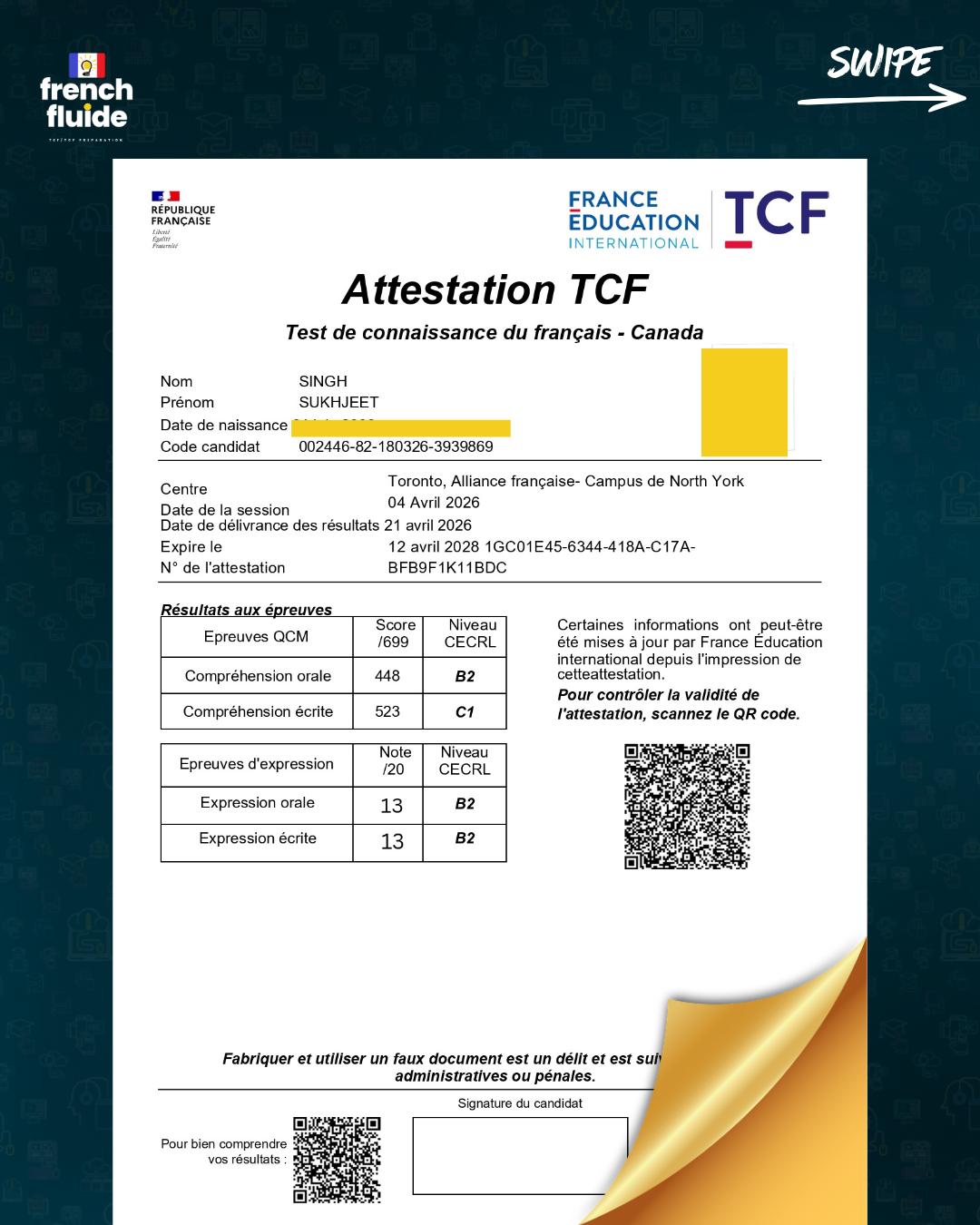
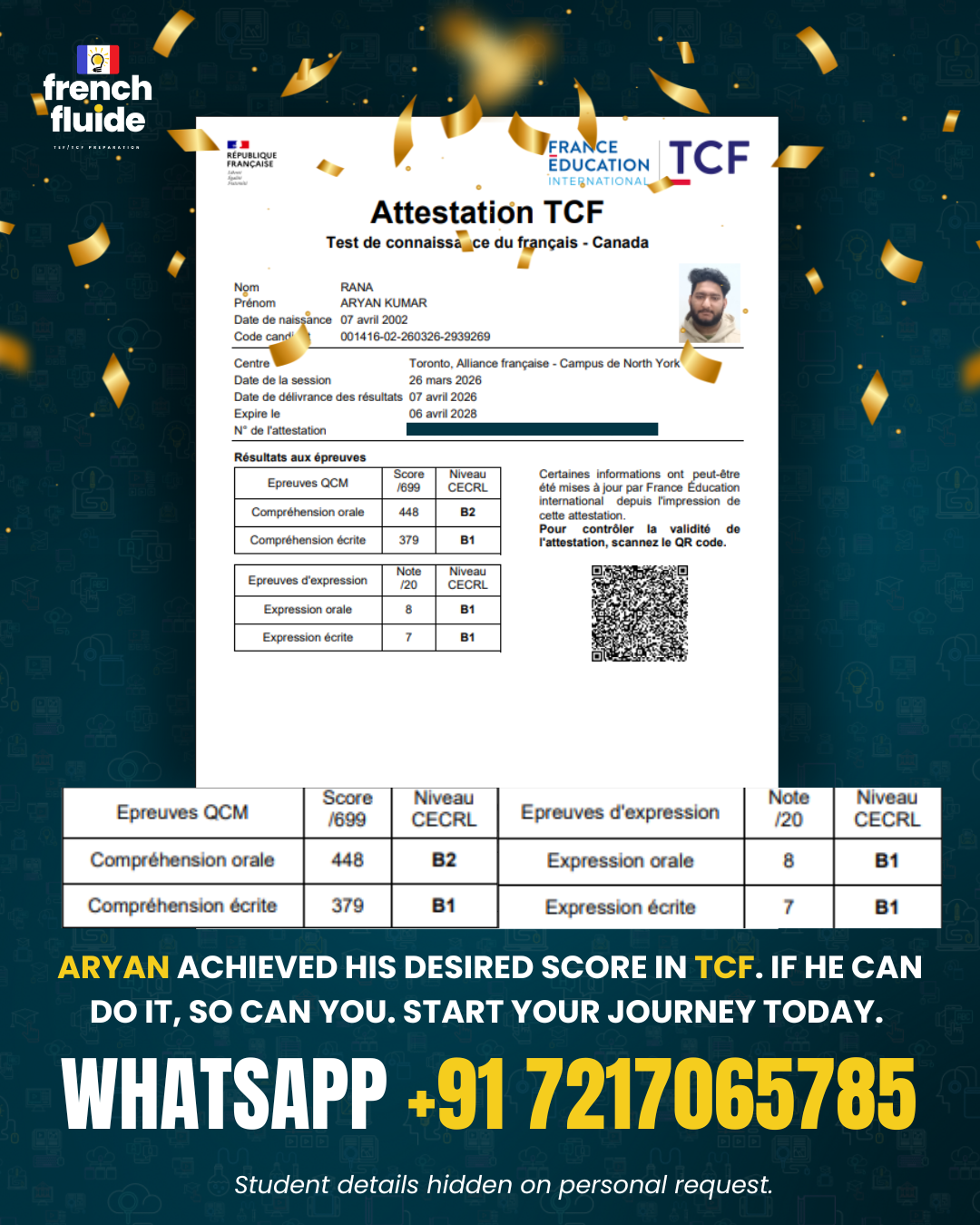
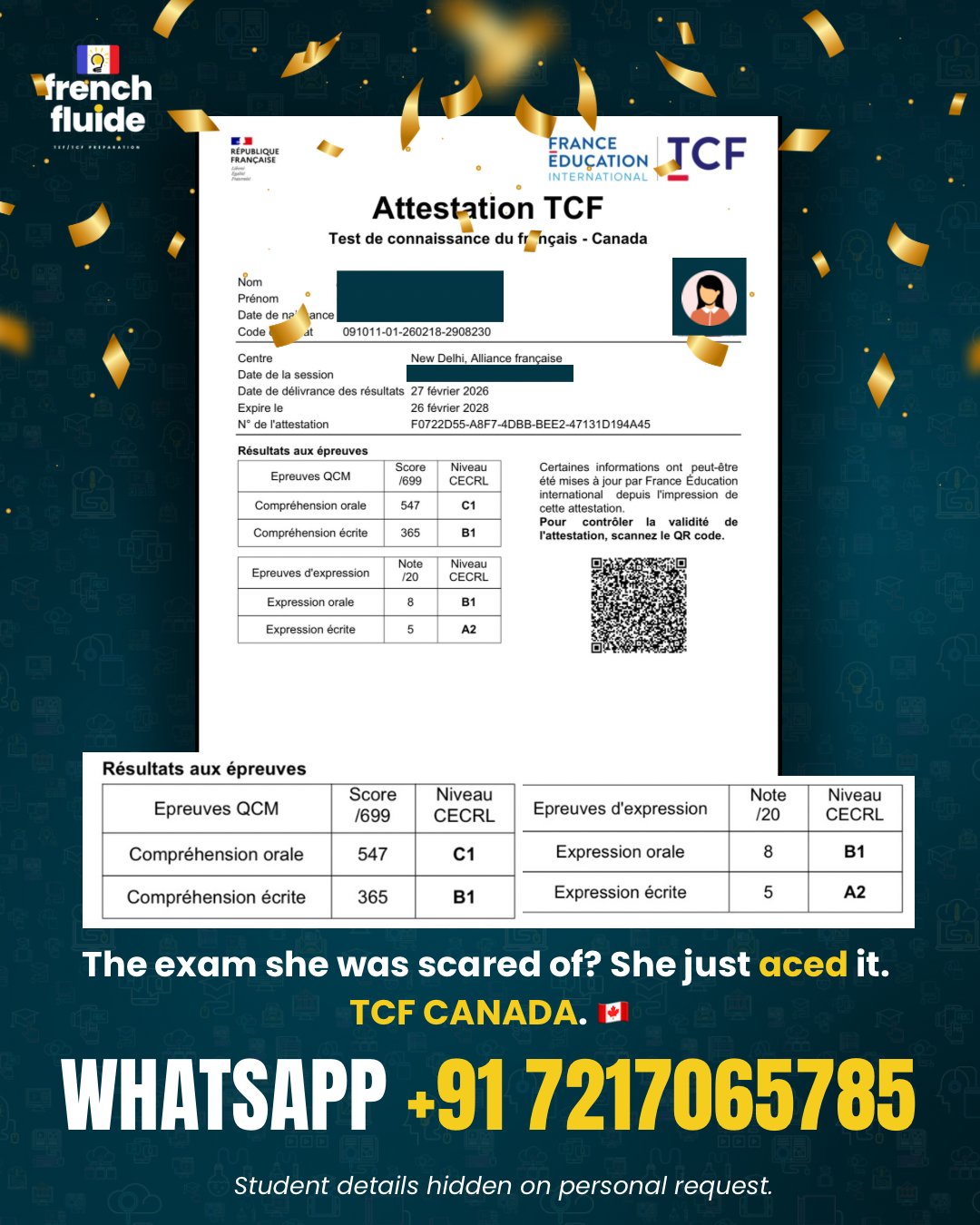
A clear guide to the TCF Canada exam — its format, question style, and a structured way to prepare for Listening, Reading, Speaking, and Writing.
TCF Canada (Test de connaissance du français pour le Canada) is a standardized French proficiency test recognized by Immigration, Refugees and Citizenship Canada (IRCC). It is used to demonstrate French language ability for Express Entry, Canadian citizenship applications, and certain provincial immigration programs.
Like TEF Canada, your TCF Canada results are converted into Canadian Language Benchmark (CLB) levels, which can directly affect your Express Entry points or your eligibility for programs requiring a specific level of French. Always verify the current acceptance rules and requirements on the official IRCC website.
TCF Canada is taken by candidates applying for Canadian permanent residence through Express Entry (including French-speaking category draws), applicants for Canadian citizenship who need to prove language proficiency, and candidates for certain Provincial Nominee Programs that accept TCF Canada results. It's also a common choice for candidates who prefer a more objective, multiple-choice-heavy test format.
TCF Canada assesses the same four core skills as other IRCC-recognized French tests, but with its own distinct question style and delivery format. Listening and Reading are typically presented as multiple-choice questions, often with an adaptive structure where question difficulty adjusts based on your responses.
Multiple-choice comprehension questions based on recorded French audio at varying speeds.
Multiple-choice questions testing comprehension of written texts, often with increasing difficulty.
An oral task assessing your ability to interact, describe, and argue in spoken French.
Written tasks that test your ability to express and structure ideas clearly in French.
Not sure which test fits you better? Compare formats on our TEF Canada page before deciding.
Because TCF Canada leans heavily on multiple-choice questions with adaptive difficulty, preparation should focus on speed, accuracy, and comfort with the elimination-based answering style — not just general French ability.
TCF Canada's multiple-choice format rewards precise vocabulary knowledge. Regular, level-appropriate vocabulary building helps you recognize correct answers faster and more confidently.
Strong grammar fundamentals help you spot subtle differences between multiple-choice options, especially in the Reading section.
Practice structuring spoken responses clearly, with natural pacing and accurate grammar, through regular conversation practice.
Focus on organizing ideas logically and writing within time limits, then get your work corrected to fix recurring mistakes.
Practice with authentic audio at different speeds, and get comfortable answering multiple-choice questions without replaying the clip.
Work on reading speed and skimming for key information, since the adaptive format rewards quick, accurate comprehension.
Because TCF Canada's Listening and Reading sections often use an adaptive format, mock tests are especially valuable — they help you get comfortable with increasing question difficulty and build the pacing and confidence needed on exam day.
French Fluide's TEF/TCF course is designed around the specific demands of each exam format — including the multiple-choice, adaptive style used in TCF Canada. Live classes, teacher mentorship, and structured mock tests help you build both language proficiency and exam-specific technique.
Fluide AI complements your live classes with 24/7 speaking, writing, and grammar practice, so you can keep building skills between sessions.
Comparing TEF and TCF, or want to keep building your French outside the exam?